...Life is skittles, and life is beer, at least in the Hartford Convention Center. The Federated Garden Clubs of Connecticut held the
Connecticut Flower & Garden Show this past weekend. I was there on Saturday to answer questions at the display from the UConn EEB Plant Growth Facility, and there was a steady stream of people, and the word was that it was difficult to even find a parking space by early afternoon. Things were busy, but I did take some time to do some photography.

Here's the display from the UConn greenhouses. It's a bit heavy on succulent plants and carnivorous plants. No messing around with arborvitaes and forced tulips for us.

Next door to the greenhouse table was Cheri C. from the
Connecticut State Museum of Natural History, with an educational exhibit on plants that are sources of fibers. Did you know that course fibers useful for rope making can be extracted from
Sansevieria, the omnipresent potted Snake Plant?

The
Connecticut Cactus and Succulent Society also had a booth in the educational exhibit section of the show, here manned by longtime CCSS-er Sully. The next big event for the CCSS is their annual show the first weekend in April, in Waterbury.

Out on the main floor, the
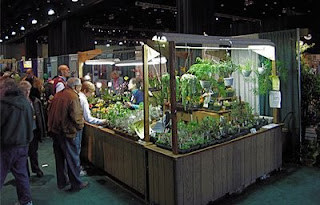
New England Carnivorous Plant Society had a booth. Shaun M. and Wild Bill could barely keep up with the hordes of budding flytrap enthusiasts asking questions about the miniature garden of terror the NECPS had set up.
The numerous vendors included Judy B. of
Lauray of Salisbury, with an eclectic selection of succulents, orchids and gesneriads.
 Black Jungle
 also had a big presence. This was their first year at the Hartford Flower Show, but it seemed like they were keeping busy. In past years, commercial sources of carnivorous plants had been few and far between at the show, so I'm sure there was some pent up demand.

I didn't get many photos of the garden installations, but I really liked this one from the
Connecticut Horticultural Society, who put together a charming mockup of an urban garden complete with vegetable patch and compost bin.
 It's been about a month and a half since the Sarracenia plants finished their winter nap in cold storage, and many of them are flowering. This one is Sarracenia flava, the Yellow Pitcher Plant, a carnivore native to the southeastern United States from Virginia to Florida. The particular form in the photo, without any red markings around the pitcher mouths, is relatively common in the Carolinas, according to Donald Schnell in Carnivorous Plants of the United States and Canada.


